 xuseen dacwo
 Modern Engines of Growth and Human Capital
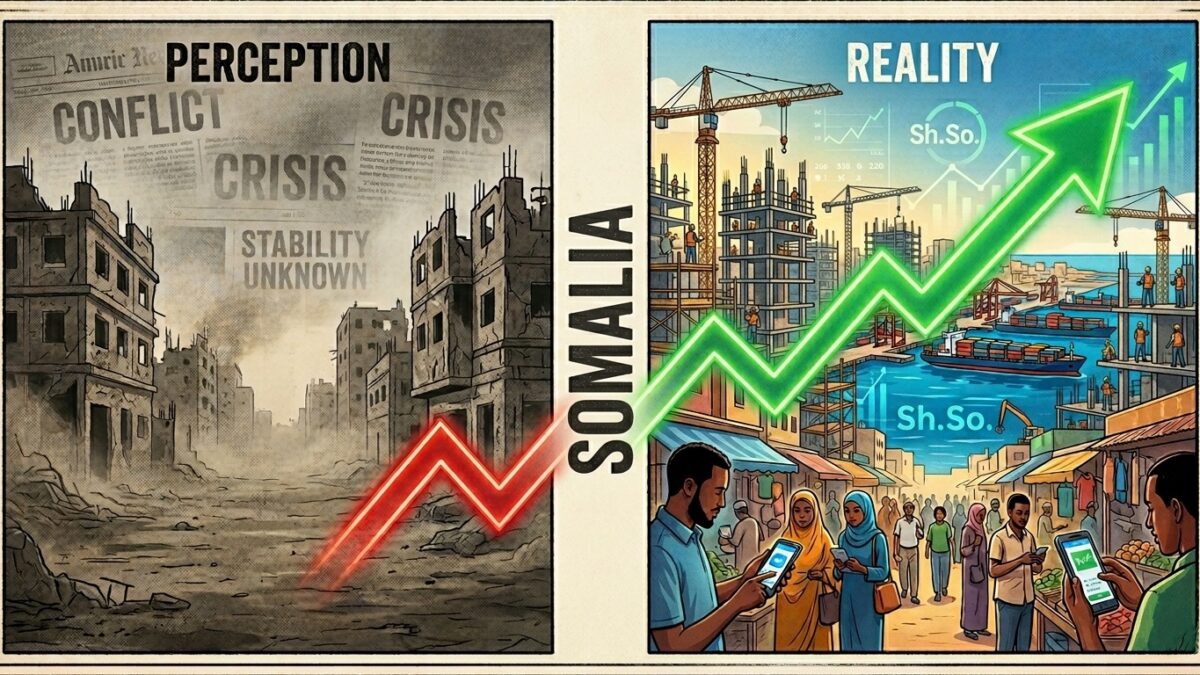
For decades, the global shorthand for Somalia has been a static loop of 1990s imagery: conflict, fragility, and collapse. But while the world’s mental map remains frozen in time, the reality on the ground has moved. Today, the “Somali risk” is increasingly mispriced maintained by those who aren’t paying attention. The real story isn’t a plea for sympathy, it is a case for strategic arbitrage.
The gap between perception and reality is no longer just public relations problem but it is an economic distortion. In a global system where confidence drives capital, the outdated narrative surrounding Somalia acts as a “perception tax,” hiking costs for investors and stalling partnerships that are, by all data-driven metrics, ready to launch.
Institutions are rebuilding, yes. But the true engine of the Somali recovery isn’t found in a government ledger; it’s in the streets of across Somalia’s major urban centers and other cities. It is found in the entrepreneurs who returned from the diaspora to launch startups and manufacturing and hospitality industries and digital banking, and the traders who have made Somalia’s telecommunications and mobile money sectors some of the most efficient and competitive in East Africa where transfers take seconds, they are market leaders navigating a frontier economy. When the world overlooks this human capital, it misses the “Somali Dividend.” This isn’t a country waiting to be saved it is a nation waiting to be accurately priced.
In the Rooms of Power: Translating Technical Milestones into Market Opportunity
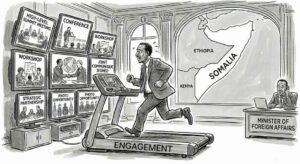
For too long, Somalia’s communication has been defensive, responding to crises after they hit the wire. That era must end. To close the perception gap, Somalia must transition from reactive diplomacy to aggressive, strategic influence. This requires more than just “better tweets.” It requires a sophisticated presence in the rooms where global policy is baked before it is served: Somalia must engage directly with the intellectuals of DC, London, and Brussels. By partnering with policy forums and advocacy institutions, Somalia can shift from being the subject of white papers to a contributor to regional security and trade discourse.
In the halls of power, representation is not enough. Sophisticated lobbying efforts must translate technical milestones like the HIPC debt relief or East African Community (EAC) accession into the language of “opportunity cost” for Western and regional partners.
Digital diplomacy should bypass traditional media gatekeepers, speaking directly to global investors about regulatory improvements and the legal frameworks now protecting foreign capital.
The hesitation of global investors often stems from the absence of a clear narrative. Investors don’t fear risk; they fear the unknown. Somalia’s task is to make the risk “legible.” This means being transparent about the hurdles while highlighting the massive upside in emerging sectors like blue economy ventures, renewable energy, and regional logistics.
The recent fiscal discipline signaled by debt relief isn’t just a technical achievement it’s a credit rating in waiting. The accession to the EAC isn’t just a treaty it’s a bridge to a 300-million-person market.
In modern geopolitics, what is overlooked is undervalued. If Somalia remains defined by its past, it will continue to be priced by its past. The country is no longer a passive recipient of international aid, it is a rising actor on a complex, promising path. But until the “story” of Somalia matches the “substance” of Somalia, capital will remain on the sidelines. It is time for the world to update its map. The battle for Somalia’s future will not just be won in its institutions, but in the global marketplace of ideas. Because capital follows in confidence and confidence begins with a story told clearly, consistently, and on one’s own terms.