Somalia has existed in the global energy market more as a theoretical assumption than a tangible destination. To the international analysts, it was a territory defined by pre-1991 memories and speculative analogies, priced by its proximity to the oil-rich Arabian Peninsula but systematically avoided because of the high-risk label attached to its internal politics.
As the drill bit meets the seabed at the Curud-1 well site, Somalia is entering a transition of real geopolitical and macroeconomic significance. This mission is not merely an exploration exercise, it is the first substantive step in a broader effort to move Somalia from the category of structural net importer toward a future in which it can play a meaningful role in the Indian Ocean energy economy.
The Mirror of the Gulf
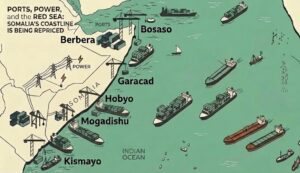
The story behind this offshore campaign rests on a renewed reading of the Somali Basin. Historical work from the 1950s through the 1980s, when major international companies held concessions in parts of Mudug and Nugaal, already pointed to hydrocarbon potential, the quality of the evidence has changed, modern seismic technology now allows a more precise assessment of what lies beneath Somalia’s waters.
Somalia’s offshore basins are increasingly viewed as geologically comparable to productive fields across the Gulf of Aden region, especially Yemen. Early estimates from industry sources and Somali institutions suggest substantial unrisked resources, though the real test is not the headline number. The real test is whether drilling converts possibility into proof. Even if part of that potential is confirmed, Somalia’s place in the regional energy conversation will change decisively.
Breaking the Price-Taker Trap
The significance of Curad-1 extends far beyond the balance sheet of an oil project. For Somalia in 2026, energy is not a luxury debate. It is a question of economic security. The country remains heavily dependent on imports of fuel, power generation, and essential goods, which leaves households and businesses exposed to external shocks.
The fragility of this dependence was laid bare in March 2026, when a regional supply disruption caused fuel prices to surge by 108% in a single week the consumers felt immediately through higher transport costs, more expensive electricity, and rising food prices. On an import relying economy, this kind of volatility does not stay confined to a single sector. It spreads quickly through the entire cost structure of daily life.
This is why domestic energy development matters. It is not only about export potential. It is about reducing exposure to imported inflation, lowering the cost of electricity, and creating a more stable base for productive activity. If Somalia can convert domestic gas and oil production into feedstock for refining, power generation, and fertilizer production, the impact would reach well beyond the energy industry. It would touch agriculture, manufacturing, logistics, and household purchasing power.
A Model for Fragile States
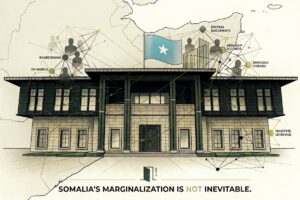
Somalia does not have the luxury of pursuing resource development through a standard template designed for stable, capital rich states such as the GCCs, It needs a structure that combines technical expertise, long-term support, and security planning in a way that reflects local realities.
That is why this project matters as a sovereign experiment is an attempt to pair resource development with state building rather than treat the two as separate tracks, if it’s done well, it could help Somalia move away from aid dependence and toward resource led growth. Done poorly, it could deepen the very vulnerabilities it is meant to solve.
Oil can strengthen institutions, but it can also expose weak ones. The history of resource politics in fragile states is full of cases where promise outpaced governance. Somalia knows this history well. The country has lived through the collapse of earlier concession-era expectations, when geological promise existed but political stability did not, that is why the current phase must be handled with discipline, transparency, and clear national ownership.
The Meaning of the Moment
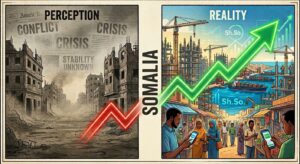
Still, the significance of Curad-1 should not be underestimated. For the first time in more than two decades, Somalia is not being discussed only as a place of risk but an alternative to the risky politics in the Middle East. That shift matters. Markets, policymakers, and regional actors do not simply respond to geology and geography they respond to what geology makes politically and economically imaginable.
The success of the current campaign will not be measured only in barrels. It will be measured in whether Somalia becomes more capable of setting its own terms, attracting more serious investment, and building the institutions needed to manage what comes next. It will be measured in whether the Somali shilling becomes more stable, whether energy costs begin to ease, and whether Somali entrepreneurs face a better operating environment than the one that has defined the past.
Somalia is still early in this journey. The risks are real, and the outcome is not predetermined. But something important has already changed. The country is no longer being read only through the lens of its past. It is beginning to be judged by what it might become, and that is the real significance of Curad-1.
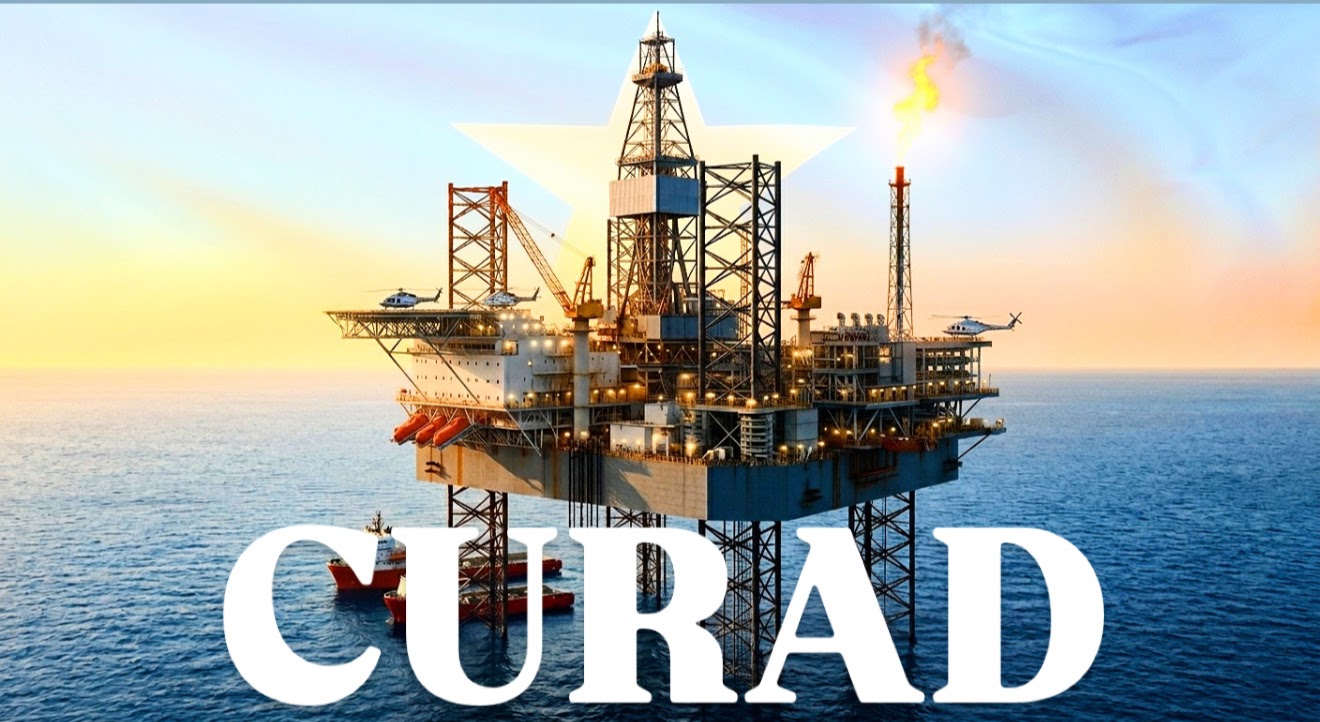
CURUD-1: The Sovereign Pivot
by
 xuseen dacwo
 xuseen dacwo