
 amiin ahmed
 How Patronage Shapes Somali Diplomacy
In Architecture of Fragility, Somali foreign policy was described as a system shaped by fragmentation and competing centers of power. In From Fragmentation to Formality, the case was made for institutional redesign. In Symbolism Over Substance, the observable outcome was clear: a diplomacy that generates visibility without influence.
Why this outcome persists.
The underperformance of Somalia’s Foreign Service is not primarily a capacity constraint. It is the product of a political-economic equilibrium in which diplomatic inefficiency performs a domestic function. What appears externally as weakness is, internally, a mechanism of political management. The system is not failing. It is operating according to the incentives embedded within it.
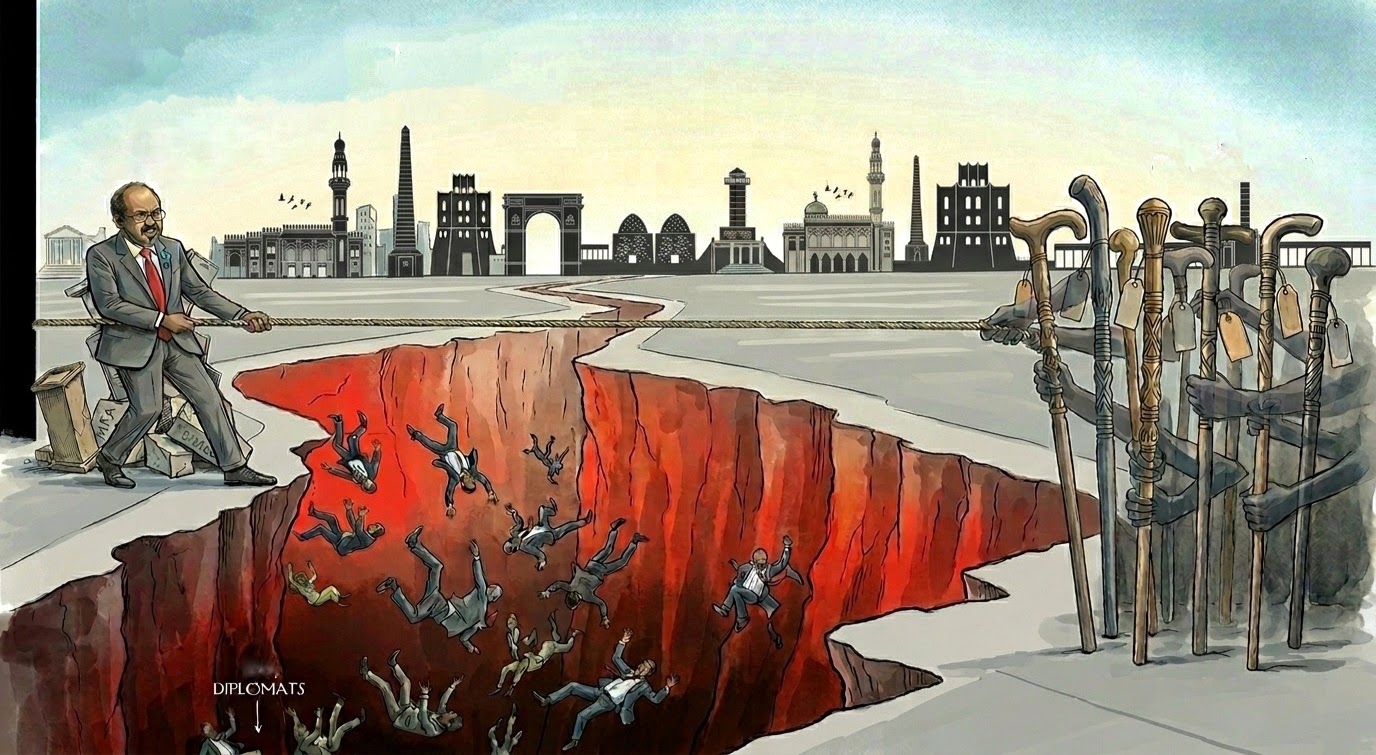
At the center of this equilibrium is a simple trade: diplomatic posts function as political rents. For executive actors, embassies and consulates are instruments for managing elite competition. Appointments allow rivals to be relocated, clans to be accommodated, and potential spoilers to be neutralized without direct confrontation.
Domestic payoff is immediate. The external cost is diffuse.
An underperforming ambassador imposes long-term losses in influence, negotiation capacity, and institutional continuity. Yet these costs are abstract and difficult to attribute. By contrast, the domestic benefits reduced political friction, stabilized coalitions, and satisfied constituencies are immediate and visible. In this configuration, inefficiency is not an unintended consequence. It is an embedded feature of the system.
The Ministry of Foreign Affairs therefore operates as more than a policy institution. It functions as a secondary distribution mechanism within the broader political settlement. Under the 4.5 power-sharing framework, diplomatic postings are allocated not only on the basis of strategic relevance, but also as instruments of representation. Embassies become tokens in a domestic bargaining process, reflecting internal balances rather than external priorities.
This produces a structural misalignment. The geographic distribution of missions does not consistently correspond to economic, security, or geopolitical priorities. Instead, it mirrors internal political compromises. The result is a diplomatic network that is formally expansive but strategically thin.
This pattern is consistent with broader dynamics observed in Somali state-building, where elite competition and resource allocation often shape institutional behavior more than formal mandates.
At the level of individual actors, the incentive structure reinforces the same equilibrium. Diplomatic postings provide salary, mobility, and insulation from domestic political contestation. In the absence of performance-based evaluation or a professionalized career track, advancement depends less on technical competence than on political alignment.
The rational strategy, therefore, is not to maximize diplomatic effectiveness, but to maintain patronage relationships. Institutional memory, policy continuity, and negotiation capacity become secondary to network survival. Over time, this produces a diplomatic corps optimized for internal navigation rather than external engagement.
The persistence of this system is not accidental. It is sustained by what can be described as an institutional immune response. Attempts at professionalization transparent recruitment, merit-based promotion, or performance evaluation threaten to redistribute access to these rents. Those who benefit from the current arrangement possess both the incentive and the capacity to resist change.
Reform therefor acts as calculated displacement. Technical proposals are recast as existential threats to representation and balance. In a context where clan-based politics remain the state’s central organizing principle, such framing is highly effective.
Bureaucratic structure further entrenches this equilibrium. The absence of systematic performance metrics prevents the emergence of internal constituencies for reform. Missions are not evaluated against measurable outputs such as trade facilitation, policy influence, or consular efficiency. Without feedback loops, there is no mechanism for institutional learning.
Opacity becomes functional. Informal practices, unreported revenues, and inactive missions persist not despite the system, but because they serve those operating within it.
The result is a stable but suboptimal equilibrium: a foreign service that delivers domestic political value while underperforming internationally.
This creates a fundamental constraint for reform. The challenge is not technical design, but incentive realignment. Professionalization is inherently redistributive. It shifts authority from informal networks to formal institutions, from discretionary allocation to rule-based systems.
For political leadership, this introduces a clear asymmetry: the costs of reform-namely alienating key domestic actors are immediate and concentrated, while the benefits improved diplomatic performance and increased international leverage are long-term and diffuse. Under such conditions, maintaining the status quo is often the rational choice. Reform, therefore, must be politically engineered rather than administratively imposed.
A feasible entry point lies in selective formalization. Converting a limited number of high-value missions into merit-based posts can alter the incentive structure without triggering systemic resistance. Such pilots would require transparent selection processes, fixed-term appointments, and measurable performance criteria, combined with oversight mechanisms that ensure credibility.
Crucially, reform must incorporate compensatory mechanisms. Actors who lose access to patronage must be offered alternative pathways of inclusion, whether through domestic appointments or transitional arrangements. Without this, reform will continue to be framed and resisted as a zero-sum redistribution of power.
Equally important is the introduction of visible, non-partisan measurement. Demonstrable gains in areas such as trade facilitation, donor coordination, or consular services can shift perceptions of institutional value. Success must be attributable to the system, not to individual actors.
Taken together, these measures can begin to alter the underlying equilibrium.
Somalia’s diplomatic apparatus is not simply underperforming. It is performing a different function one rooted in the management of clan based political order. This was a rational adaptation in a context of fragmentation and contested authority. But as regional competition intensifies and external engagement becomes more consequential, the costs of this arrangement are increasing.
The question is no longer whether reform is technically possible. The question is whether the political system can sustain a transition from a diplomacy of distribution to a diplomacy of strategy.
Until that transition begins, Somali diplomacy will continue to exhibit the same pattern: sustained activity, limited influence, and a system that rewards the appearance of engagement over its substance.